

Low-Carbon Materials: The “Passport” Taking Vietnam’s Construction Industry to the World
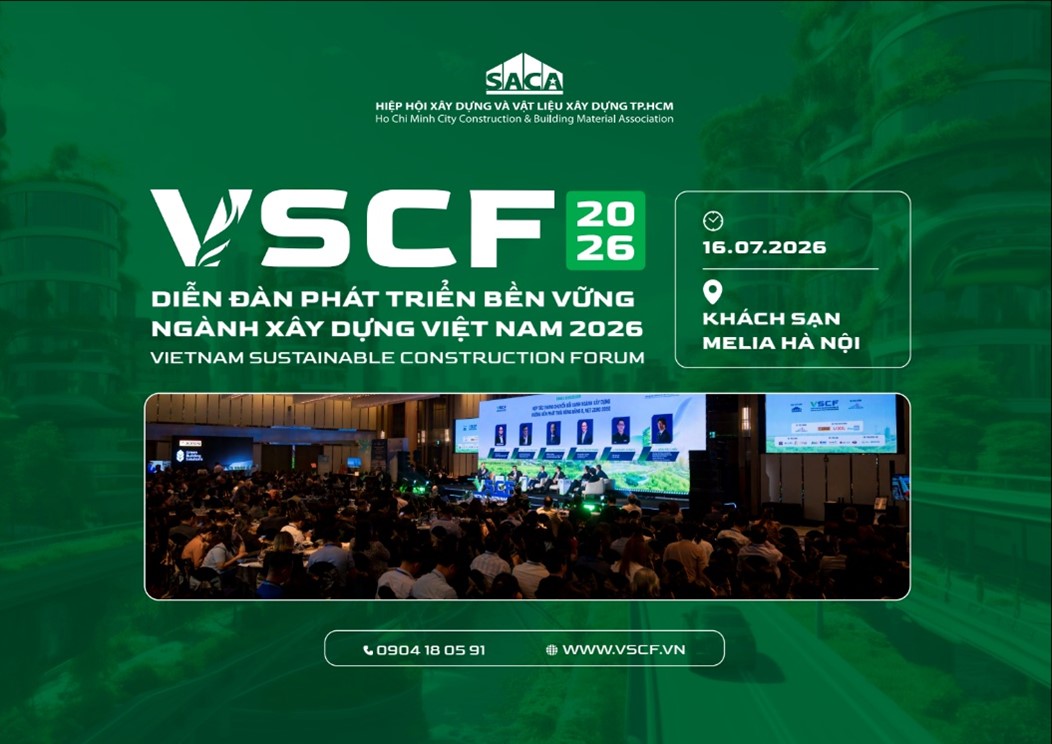
The construction and building materials industries are entering a period in which sustainability is no longer an optional advantage, but a condition for survival in the market. This was the central message conveyed at VSCF 2026 — and it raises a direct question for every manufacturer: Is your product ready to demonstrate its emissions performance?
What Are Low-Carbon Materials?
Low-carbon or low-embodied-carbon materials are materials designed to reduce greenhouse gas emissions and environmental impacts throughout their life cycle. They may use recycled or renewable raw materials, consume less energy and water during production, limit the use of substances of very high concern (SVHC), and, most importantly, have a low carbon footprint that is measured and transparently disclosed.
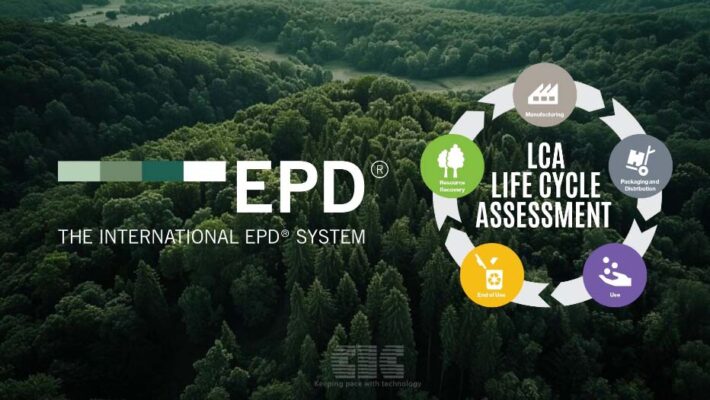
The key word is “transparency.” A product cannot simply claim to be environmentally friendly; it must provide supporting data. The globally recognised methods for demonstrating this performance are LCA (Life Cycle Assessment) and EPD (Environmental Product Declaration).
Learn more about Product Green Label Consulting Services
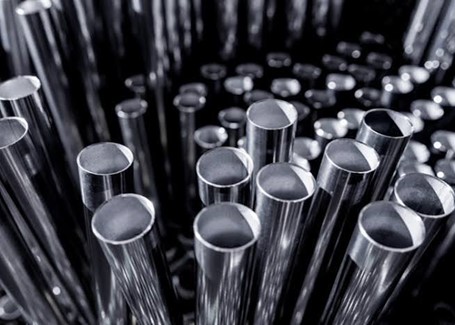
Image of low-carbon steel materials.
From “Low VOC” to “Low Carbon”: The Transition Is Underway
A compelling example presented at the forum came from the paint industry. Previously, the criteria for a paint product generally stopped at “low VOC, lead-free, and formaldehyde-free.” However, standards are rapidly shifting to a new level: ultra-low VOC, free from hazardous substances, made with bio-based raw materials, and supported by a low carbon footprint and an EPD.
The figures demonstrate the scale of this gap. Within the same product line, the Global Warming Potential during the production stage (GWP, modules A1–A3) can differ by more than 80% between an older version and an optimised version. Companies that begin measuring and improving early will be able to offer genuinely low-emission products — supported by evidence rather than advertising claims.
The same transition is taking place across low-carbon cement, recycled steel, non-fired bricks, and materials produced from recycled industrial by-products. An entirely new generation of materials is reshaping the market.
Why Low Emissions Are Now a Requirement for Export
The pressure is not driven merely by market preference, but by regulation:
- The EU’s CBAM officially entered into application in 2026, while the UK’s CBAM is scheduled to begin in early 2027 — directly targeting cement, clinker, iron, and steel, which are among Vietnam’s key material exports.
- Supply chains in Japan and South Korea are increasingly requiring product-level sustainability disclosures.
- Green building projects certified under LEED, EDGE, and LOTUS require construction materials to have transparent environmental documentation.
In short, without product-level carbon data, businesses will gradually lose their position in export contracts. The 2026–2028 period represents a decisive window for preparation — and the data must be ready before contracts are signed, rather than collected afterwards.
EPD — A Material’s “Passport”
If there is one concept that material manufacturers should remember from the forum, it is this: an EPD is the passport that enables a product to enter global markets.
Read more: EPD: A Compliance Requirement in Major Export Markets
A verified EPD precisely shows how much a product emits, how many resources it consumes, and what environmental impacts it generates — all according to an international standard that overseas partners can understand and trust. The emergence of EPD Southeast Asia is regarded as a turning point, helping remove barriers for Vietnamese materials seeking access to the EU and US markets.
During the 2026–2030 period, LCA will become a standard tool for measuring environmental impacts, EPDs will become an increasingly common requirement, and carbon footprint reporting will become a mandatory condition for any material manufacturer seeking to participate in international supply chains.
Green Finance and Green Credit: What Support Can Businesses Access?
The transition to low-carbon production requires capital. Encouragingly, the financial system is opening several specific support channels, as shared by banks at the forum:
- Green credit with preferential interest rates: Private enterprises borrowing capital for low-emission or circular projects that meet ESG standards may qualify for interest support mechanisms. A cashback rate of up to 2% was mentioned at VSCF 2026, with detailed guidance expected to be issued in the coming period. Among state-owned commercial banks, the annual volume of preferential credit allocated to sustainable production and environmentally friendly products reaches hundreds of trillions of Vietnamese dong.
- Green bonds with lower capital costs: When guaranteed or credit-enhanced by international organisations, green bonds can help businesses raise long-term capital at stable interest rates while gaining access to both domestic and international investors. Vietnam has already recorded green bond transactions for manufacturing enterprises with multi-year terms and international guarantee mechanisms.
- Capital from international financial institutions: Many domestic banks have signed green credit facilities with international partners, worth hundreds of millions of euros, specifically to finance sustainable construction and manufacturing activities. Sustainability-linked loans — whose interest rates are directly tied to emissions-reduction performance — are also becoming increasingly common.
- Additional benefits from green building certification: Materials and buildings certified under schemes such as LEED, EDGE, and LOTUS not only have better access to green finance but can also generate direct market value. Studies in Vietnam indicate that LEED-certified offices may achieve rental premiums of approximately 5–12% and higher occupancy rates.
However, there is one prerequisite. Banks have repeatedly emphasised that the greatest bottleneck is that “sustainability has not yet been quantified.” A project with positive environmental intentions may still be rejected if its benefits cannot be demonstrated through measurable data. Therefore, greenhouse gas inventories, LCA, and EPD are not merely technical documents — they form the evidence package required to unlock preferential financing. Businesses that can quantify their energy, water, and emissions savings are the businesses that can qualify for financing.
This Is an Investment, Not a Cost
An important shift in mindset is required: producing low-carbon materials is not merely a compliance burden, but a profitable investment. It can help businesses retain and expand export orders, reduce operating costs through energy savings, alternative fuels, and waste heat recovery, and unlock preferential sources of capital.
To realise these benefits, however, businesses need to begin with the fundamentals: systematically measuring product emissions, developing verified LCAs and EPDs, and establishing a clear improvement roadmap.
At CIC Construction Technology and Consultancy Joint Stock Company, the Sustainable Development Consulting Center (CSS) accompanies material manufacturers throughout this journey by providing greenhouse gas inventory services, Life Cycle Assessment (LCA), Environmental Product Declaration (EPD), CBAM consulting, and green building certification consulting. We help transform sustainability commitments into a robust body of data that international markets — and financial institutions — can trust.
Contact:
CIC Construction Technology and Consultancy Joint Stock Company
- Head Office: 4th Floor, VG Building, No. 235 Nguyen Trai Street, Khuong Dinh Ward, Hanoi
- Ho Chi Minh City Branch: No. 36 Nguyen Huy Luong Street, Binh Thanh Ward, Ho Chi Minh City
- Hotline: 0866 059 659
- Email: info@cic.com.vn
This article was compiled and developed from content presented at the Vietnam Sustainable Construction Forum 2026 (VSCF 2026) in Hanoi.