
6 Key Factors Businesses Need to Understand When Conducting a Greenhouse Gas Inventory
A greenhouse gas (GHG) inventory involves more than simply compiling emissions data. It requires effective coordination among personnel, data, methodologies, and action plans. Six key factors—including designated coordinators, data management, inventory boundary definition, supporting documentation, methodology selection, and alignment of inventory results with emission reduction targets—determine the accuracy, verifiability, and practical value of GHG inventory reports.
Through greenhouse gas inventories, businesses can assess their current emissions profile and develop appropriate emission reduction plans and solutions. This not only enhances corporate reputation and competitiveness while meeting supply chain requirements, but also creates opportunities to access green financing.
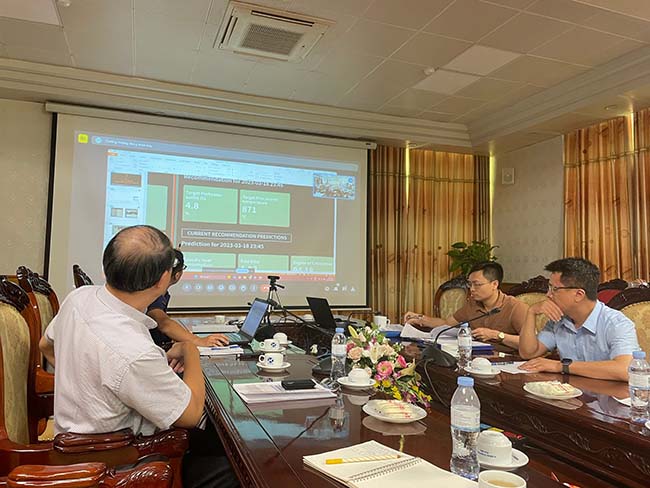
The implementation of greenhouse gas inventories not only ensures compliance with domestic regulations but also addresses the requirements imposed by supply chains.
A greenhouse gas inventory is the process of collecting data, calculating, and reporting greenhouse gas emissions and removals arising from a company’s production and business operations. The purpose of conducting an inventory is to transform operational data into a clear, verifiable emissions profile that can support business decision-making, cost optimization, and efficient resource utilization.
FROM DOMESTIC REGULATORY COMPLIANCE TO SUPPLY CHAIN REQUIREMENTS
Within the greenhouse gas management process, conducting a GHG inventory is considered the first and one of the most critical steps in positioning businesses on their green transition journey. For businesses, implementing GHG inventories is not only about complying with domestic regulations but also about meeting supply chain requirements.
Vietnam has issued lists of entities required to conduct greenhouse gas inventories, report emissions, and develop emission reduction plans. Specifically, the initial list of sectors and facilities subject to mandatory greenhouse gas inventories was issued by the Government under Decision No. 01/2022/QD-TTg. Subsequently, Decision No. 13/2024/QD-TTg of the Prime Minister updated the list of facilities required to conduct GHG inventories, covering 2,166 facilities. This list is currently undergoing further updates, with a revised version expected to be issued in the coming period.
Read more:
Decision No. 42/2026/QD-TTg: 2,441 Facilities Required to Conduct Greenhouse Gas Inventories
By conducting greenhouse gas inventories, businesses can identify their major emission hotspots and subsequently establish appropriate plans, targets, and solutions to reduce fuel consumption, lower production costs, and improve operational efficiency. This is also an important factor in enhancing corporate reputation, strengthening competitiveness within supply chains, and creating opportunities to access and attract green financing.
Based on discussions with banks implementing green financing programs, an expert noted that financial institutions are particularly interested in whether businesses hold green certifications. Such certifications demonstrate that projects implemented by businesses have been undergoing positive transformations toward reducing greenhouse gas emissions. As a result, financial institutions may offer greater flexibility in providing preferential loan interest rates. Once a business has established its emission reduction targets, preparing an ESG report becomes an advantage in accessing green financing.
Notably, businesses that meet the requirements of customers, partners, and supply chains will have greater opportunities to access, expand, and maintain their markets.
Given this importance, experts recommend that businesses take early and appropriate action. Facilities included in the mandatory GHG inventory list that fail to comply with greenhouse gas inventory reporting requirements may face legal risks and administrative penalties.
For businesses that are not subject to domestic mandatory inventory requirements, a representative of a consulting organization stated that requests for assistance with emissions data disclosure have already been received to meet the requirements of international partners, particularly from companies participating in the supply chains of foreign direct investment (FDI) enterprises. These FDI enterprises are subject to stringent emission reduction standards and requirements for greenhouse gas emissions disclosure and ESG reporting.
When Vietnamese businesses participating in these supply chains fail to disclose emissions data, importers may use default values for their calculations, potentially resulting in higher costs.
For example, the European Union’s Carbon Border Adjustment Mechanism (CBAM) is becoming a mandatory requirement within relevant supply chains. Therefore, facilities and businesses participating in these supply chains must pay attention to greenhouse gas inventory and emissions data disclosure requirements. This enables importers to submit the necessary data to the EU system, demonstrate compliance, fully meet their CBAM obligations, and help prevent carbon leakage.
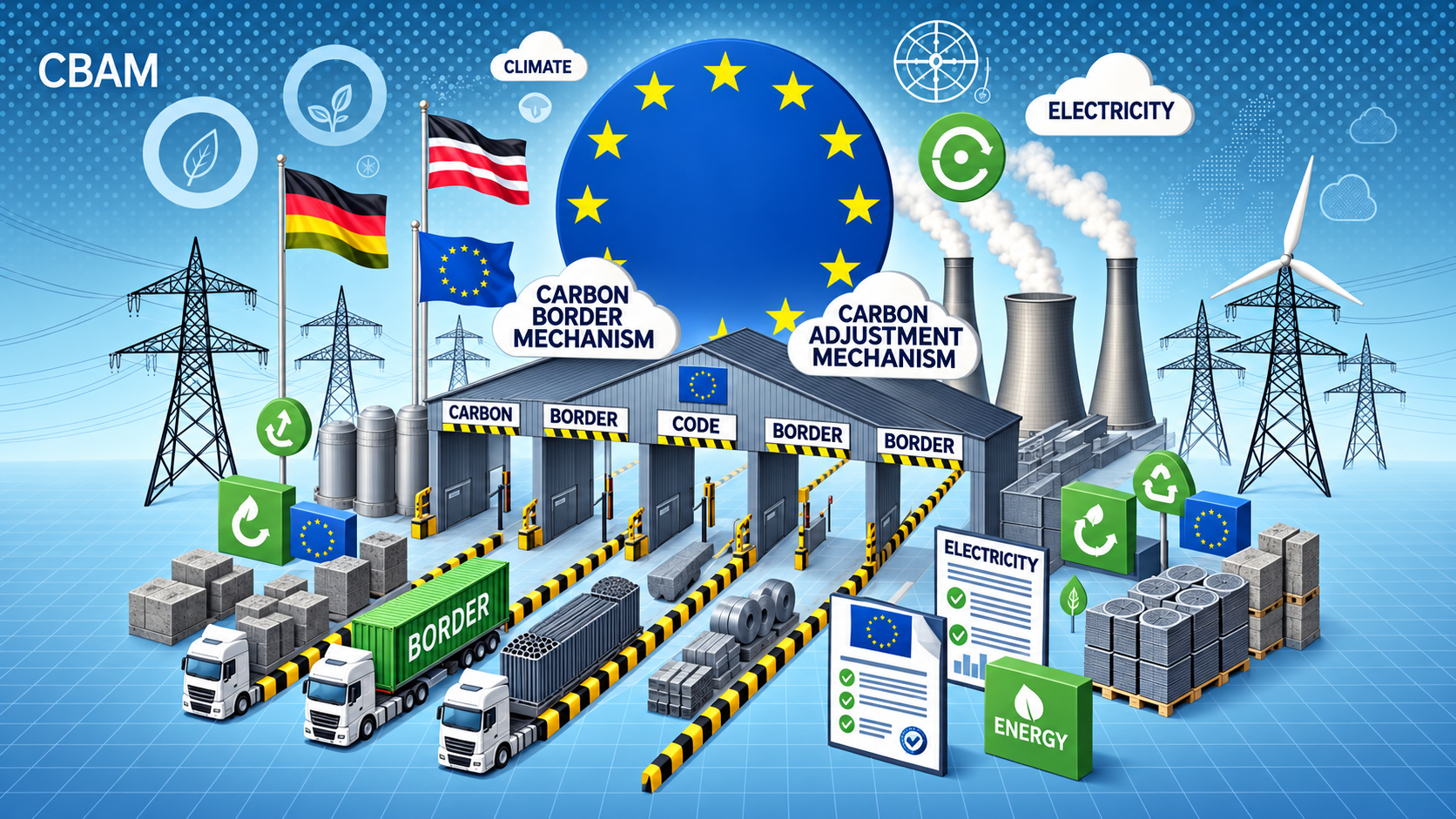
“Even businesses that are not included in the mandatory greenhouse gas inventory list should take early action to meet the requirements of supply chain partners while protecting their interests and minimizing potential financial and legal liabilities associated with non-compliance,” the expert recommended. This not only benefits businesses but also contributes to achieving Net Zero commitments.
KEY BOTTLENECKS IN IMPLEMENTING GHG INVENTORIES AND EMISSION REDUCTION MEASURES
According to expert analysis, when businesses do not know where their emissions originate, they may invest in costly solutions that deliver limited emission reductions while overlooking the largest and most readily addressable emission sources.
More seriously, unreliable emissions data can become a significant risk. International customers require emissions data covering Scope 1, Scope 2, and Scope 3, supported by transparent calculation methodologies. Failure to meet these requirements may result in businesses losing orders or being removed from approved supplier lists. For financial institutions, insufficient emissions data makes it more difficult for businesses to access preferential credit facilities. Disclosing unsupported emissions figures may also expose businesses to accusations of greenwashing.

The solution to these bottlenecks is to get the first step right: conducting a systematic greenhouse gas inventory. With accurate data, businesses can determine which emission sources account for the largest share, identify opportunities for rapid and cost-effective reductions, and establish emission reduction targets based on measurable evidence.
Discussing the bottlenecks and limitations businesses commonly encounter when implementing greenhouse gas inventories, experts identified six core issues.
First, businesses often lack a designated GHG inventory coordinator or a clearly assigned person responsible for overseeing the process, resulting in insufficient direction and delayed implementation. In practice, greenhouse gas inventory management remains a relatively new responsibility and has not yet been fully integrated into corporate governance structures. Therefore, businesses should consider appointing dedicated personnel to manage, supervise, and monitor these activities.
Second, due to the absence of designated coordinators and a comprehensive management system, relevant data is often fragmented and dispersed across multiple departments. Consequently, collecting, reconciling, and consolidating data for GHG inventories becomes time-consuming.
Third, businesses may not have clearly defined whether their inventory covers Scope 1, Scope 2, or Scope 3 emissions, which can lead to double counting or the omission of significant emission sources.
Fourth, supporting documents and invoices are often not stored completely or systematically. Information related to emission sources may not be adequately recorded, and the lack of valid supporting documentation makes it difficult to substantiate and verify emissions data.
Fifth, businesses face challenges in selecting appropriate calculation methodologies and emission factors. Therefore, they need to adopt a consistent methodology aligned with the applicable standards and establish a centralized emission factor database.
Sixth, businesses may complete their GHG inventories without linking the results to emission reduction targets and plans. As a result, inventory findings are not effectively utilized to develop and monitor emission reduction measures.
“Greenhouse gas inventory management is not solely the responsibility of the environmental department; it requires cross-departmental collaboration.” Emphasizing this point, the expert outlined a six-step GHG inventory process for businesses: defining objectives and the reporting year; establishing organizational boundaries and Scope 1, 2, and 3 coverage; identifying emission sources; collecting activity data and conducting quality checks; calculating emissions using appropriate methodologies; and reporting results with proposed emission reduction solutions.
A greenhouse gas inventory is not merely intended to produce a report; it also provides a foundation for business decisions related to operations, production, and business development. The more transparent and reliable the data, the greater the opportunities for businesses to save costs and reduce emissions. In particular, businesses that start early will gain advantages in customer relationships, regulatory compliance, and access to green financing while minimizing legal and financial liability risks.
CIC SUPPORTS BUSINESSES IN GREENHOUSE GAS INVENTORY MANAGEMENT ACROSS SCOPE 1, SCOPE 2, AND SCOPE 3

CIC supported Vietnam Italy Steel Joint Stock Company in the verification of its facility-level Greenhouse Gas Inventory Report.
With a team of experienced specialists and dedicated software solutions (CAGE Carbon and Net Zero App 2050), the Center for Sustainable Solutions (CSS) – CIC Construction Technology and Consultancy Joint Stock Company provides comprehensive greenhouse gas inventory services in accordance with the GHG Protocol, ISO 14064-1, and applicable Vietnamese regulations, covering all three emissions scopes:
Scope 1 – Direct GHG Emissions: Emissions from sources owned or controlled by the business, including fuel combustion in boilers, generators, and vehicles; process emissions from manufacturing activities; and fugitive emissions from refrigerants and industrial gases.
Scope 2 – Energy Indirect GHG Emissions: Emissions associated with purchased electricity, steam, heating, and cooling, calculated using the national grid emission factor published by the Department of Climate Change.
Scope 3 – Value Chain GHG Emissions: The 15 categories of other indirect emissions throughout the value chain, including purchased raw materials, transportation and logistics, waste treatment, business travel, and the use and end-of-life treatment of products. This scope is increasingly subject to data disclosure requirements from FDI partners, the CBAM mechanism, and international customers.
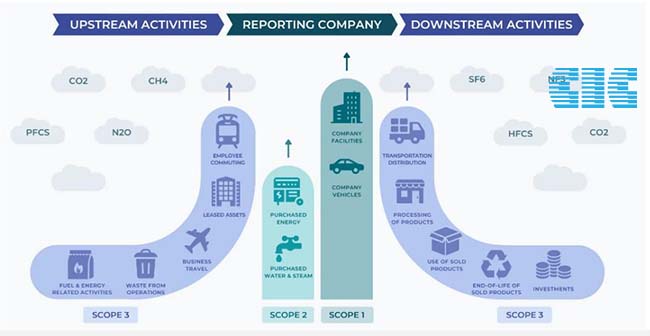
CIC’s service process follows six standard steps: defining inventory objectives and the base year; establishing organizational boundaries and Scope 1, 2, and 3 coverage; identifying emission sources; collecting activity data and conducting quality control; calculating emissions using appropriate methodologies; and preparing inventory reports, supporting third-party verification, and proposing an emission reduction roadmap.
As a result, businesses can not only fulfill domestic compliance obligations and supply chain requirements but also identify emission hotspots, optimize energy costs, strengthen competitiveness, and expand opportunities to access green financing on their journey toward Net Zero.
Source: VnEconomy – Vietnam Economic Times
Contact for Consultation:
CSS – CIC Construction Technology and Consultancy Joint Stock Company
Head Office: 4th Floor, VG Building, No. 235 Nguyen Trai Street, Khuong Dinh Ward, Hanoi, Vietnam
Ho Chi Minh City Branch: No. 36 Nguyen Huy Luong Street, Binh Thanh Ward, Ho Chi Minh City, Vietnam
Hotline: 0866.059.659
Website: cic.com.vn – netzero2050.vn