GHG Inventory 2026: What Should Businesses Prepare Before the 2027 Reporting and Allowance Surrender Period?
2026 marks a critical phase in which businesses can no longer remain outside Vietnam’s roadmap for greenhouse gas inventory and emissions allowance management. As new regulations on the domestic carbon market gradually come into effect, standardizing emissions data, developing mitigation plans, and preparing for the 2027 reporting period have become urgent requirements for major emitting facilities.
Vietnam’s journey toward Net Zero is entering a new phase: from voluntary commitments to a legally structured compliance pathway with emissions allowances and market-based mechanisms. At the recent online seminar titled “Updates on Legal Regulations on Greenhouse Gas Inventory and the Carbon Credit Market,” organized by CIC Technology and Consultancy Joint Stock Company, experts highlighted important regulatory updates for participating enterprises. Beyond providing updates on new legal documents, the seminar focused on a highly practical question: what should businesses prepare from now on to avoid being passive when facing greenhouse gas inventory obligations, emissions allowance allocation, and the formation of Vietnam’s domestic carbon market?
Greenhouse Gas Inventory Is No Longer a Standalone Report

At the seminar, experts emphasized that greenhouse gas inventory is no longer merely a periodic reporting activity. It is becoming a foundation for enterprises to manage emissions, develop mitigation plans, monitor emissions allowances, and prepare to participate in the carbon market.
Under current regulations, enterprises subject to mandatory requirements must fulfill three key obligations: conducting periodic greenhouse gas inventories, developing greenhouse gas emissions reduction plans, and complying with allocated emissions allowances.
The affected sectors include energy, transportation, construction, industry, waste, agriculture, forestry, and land use. These are all sectors with high energy consumption, significant emissions, and increasing pressure from environmental transparency requirements, ESG practices, green supply chains, and international carbon adjustment mechanisms.
| Sector | Number of Enterprises | 2025 Allowance | 2026 Allowance |
| Cement | 51 | 73,363,234 tCO₂e | 80,277,575 tCO₂e |
| Thermal Power | 34 | 138,667,965 tCO₂e | 151,914,862 tCO₂e |
| Iron and Steel | 25 | 31,051,193 tCO₂e | 36,199,017 tCO₂e |
| Total | 110 | 243,082,392 tCO₂e | 268,391,454 tCO₂e |
These figures show that the emissions allowance mechanism is no longer a distant policy direction. It has begun moving into a concrete implementation phase. For high-emitting sectors, standardizing data, identifying emissions sources, and developing mitigation roadmaps must be carried out as early as possible.
Emissions Allowances and Carbon Credits: Cost or Opportunity?
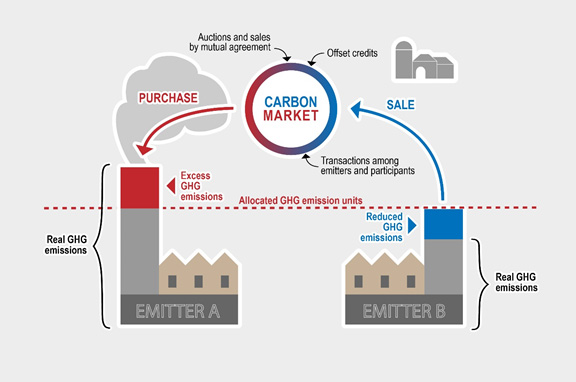
Once emissions allowances are allocated, businesses must monitor their actual emissions and fulfill the corresponding allowance surrender obligations. If actual emissions exceed the allocated allowance, enterprises may need to purchase additional allowances or use eligible carbon credits for offsetting.
According to the mechanism updated at the seminar, enterprises may use carbon credits for offsetting purposes, but the maximum amount used must not exceed 30% of the allocated emissions allowance.
In addition, in certain cases, enterprises may borrow allowances from the next compliance period to cover current shortfalls, up to a maximum of 15% of the allocated allowance. However, borrowed allowances cannot be used for trading or exchange.
This creates a new reality: emissions are no longer only an environmental issue. They are directly linked to operating costs, competitiveness, and corporate technology investment strategies.
Businesses that emit beyond their allocated allowances may incur additional costs for compensation. Conversely, enterprises that effectively control emissions, invest in clean technologies, and maintain transparent data can reduce compliance pressure, optimize costs, and gain a competitive advantage when the carbon market becomes operational.
The Biggest Challenge Lies in Emissions Data
Many practical questions from businesses focused on how to classify emissions sources, implement inventory processes, prepare reports, and provide evidence for verification. In reality, many enterprises are currently facing major bottlenecks, including:
- Data on electricity consumption, fuel, raw materials, and production output is scattered across multiple departments, factories, or member units.
- Internal staff may not yet have sufficient expertise in greenhouse gas inventory, emission factors, emission scopes, and calculation methodologies.
- Supporting documents and evidence are not stored in a standardized manner, creating difficulties when reports need to be checked, cross-referenced, or independently verified.
- Inventory processes remain manual, making them prone to errors and time-consuming during data aggregation.
This is why businesses need to shift from the mindset of “preparing a report for submission” to “managing emissions data as a strategic asset.”
Read more:
CIC Accompanies Businesses on the Journey Toward Net Zero
With more than 35 years of experience in technology, digital transformation consulting, green transition, and sustainable development, CIC has also launched the Net Zero 2050 App. This platform helps businesses reduce 70% to 90% of the time and workload required for greenhouse gas inventory, minimize risks related to administrative penalties, and optimize emissions allowance assets in preparation for the promising carbon market. Businesses can register to experience the Net Zero 2050 App here.
During the 2025–2026 period, the earlier enterprises prepare their emissions data systems, inventory processes, and mitigation plans, the greater their advantage in reducing compliance risks, optimizing costs, and strengthening competitiveness.
Enterprises that need to review greenhouse gas inventory obligations, build an emissions management system, or learn more about the Net Zero 2050 App may contact CIC for a suitable consulting roadmap.
Hotline: 0866.059.659
Website: cic.com.vn – netzero2050.vn

Global Carbon Market 2025: Revenues Surpass US$100 Billion